The beginning of the semester offers a critical opportunity to show students they matter. One of the easiest and most impactful ways staff and faculty can do this is by learning and using students’ names.
For Yuba College, fostering a caring culture is not a short-term strategy – it is a defining part of the institution’s identity. That commitment is reflected in the college’s decision to remain a Caring Campus Network member through 2030, reinforcing a long-term investment in connection, belonging, and student success.
As one of the smallest Caring Campus institutions, Ranger College in Texas has created a culture of care that removes barriers, builds trust, and strengthens student success, demonstrating how faculty and staff can create meaningful change regardless of size or geographic location.
Six community colleges nationwide will participate in a Lumina Foundation-funded quantitative study examining how Caring Campus impacts student retention, persistence, completion, and success.
Four Texas community colleges – Brazosport College, Clarendon College, Texarkana College, and Hill College – are strengthening campus cultures of care through Caring Campus, with grant support from the Trellis Foundation.
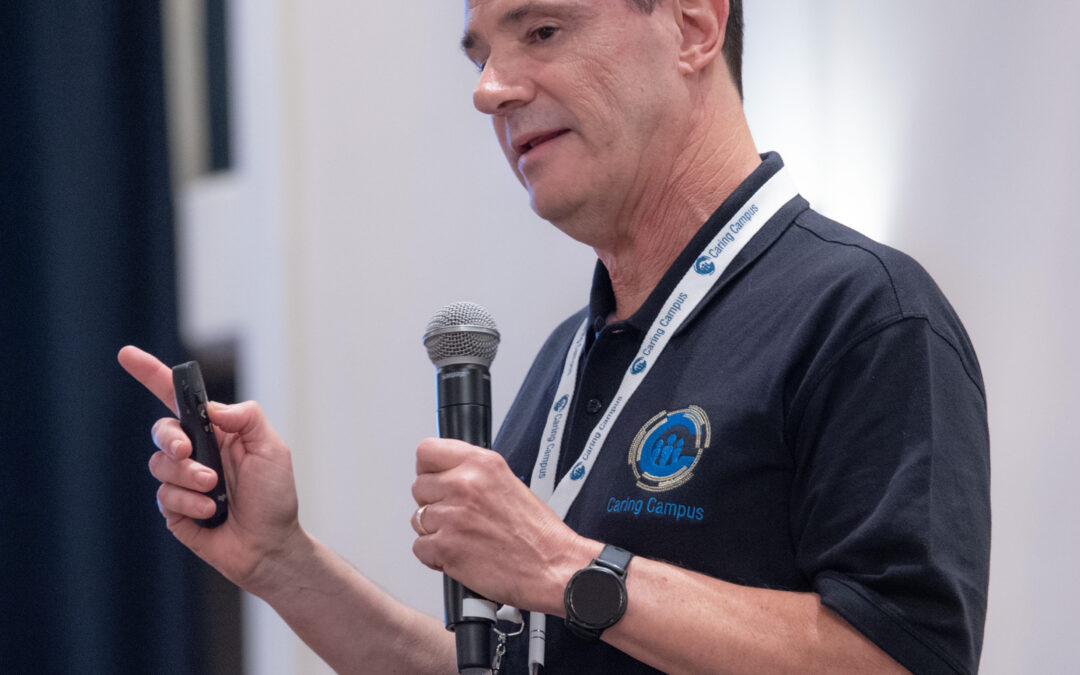
Hear highlights from the inaugural Caring Campus Conference: Building a National Culture of Care, held Nov. 12-14, featuring reflections from staff, faculty, and administrators from across the country.
The Institute for Evidence-Based Change (IEBC) received a grant from the ECMC Foundation to expand Caring Campus among rural postsecondary educational institutions (PEIs) around the United States. IEBC interviewed leaders from these PEIs to better understand the challenges and advantages of implementing culture change and student support programs in their institutions.
South Orange County Community College District is elevating its culture by bringing Caring Campus to the district level, creating a bridge between District Services and the district’s two community colleges.